Full Title: Changes in World and Regional Populations 1950-2100 [Article No. 1.1.2]
日本語タイトル:世界と地域人口の推移 1950-2100 [記事 No. 1.1.2]
Posted on March 13, 2026.
[Figures and Tables]
Figure 1 Changes in World Populations 1950-2100
Figure 1 世界人口の推移 1950-2100
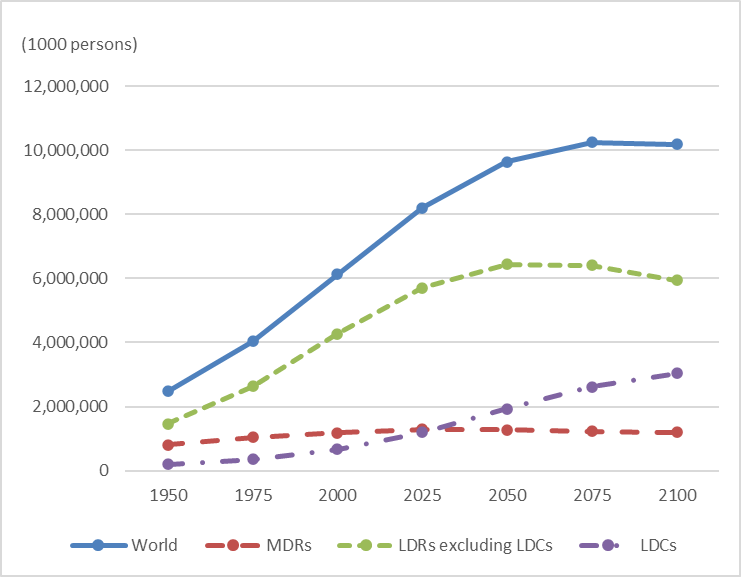
Notes: 1. MDRs, LDRs, and LDCs respectively indicate more developed regions, less developed regions, and least developed countries. 2. The figures are estimates and medium variant projections.
(注)1. MDRs, LDRs, と LDCs はそれぞれ more developed regions(より発展した地域), less developed regions(より発展していない地域), least developed countries (最も発展していない地域)を表している. 2. 数値は推計値と中位予測値である.
Source: By Yoshida using UN (2024) “World Population Prospects 2024” data.
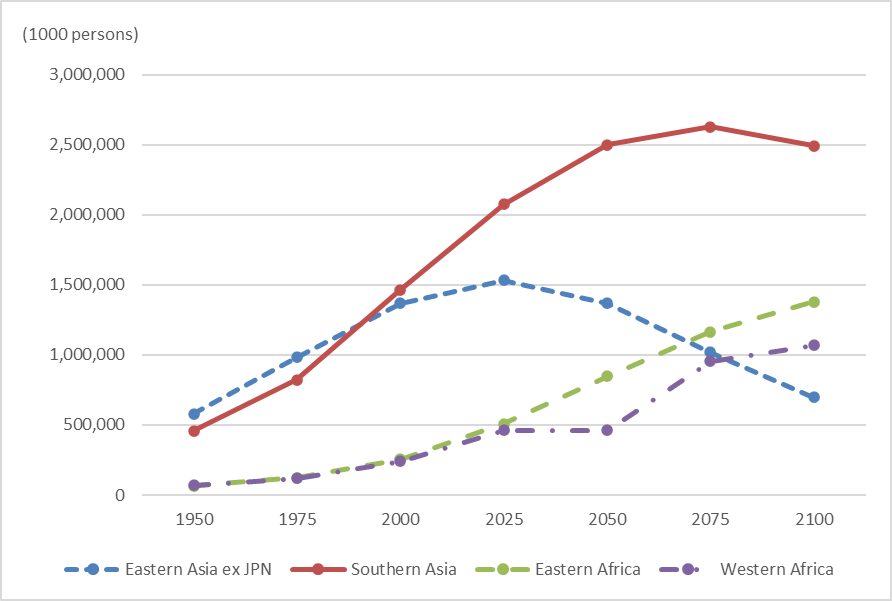
Figure 2 Changes in Regional Populations 1950-2100
Figure 2 地域人口の推移 1950-2100
Panel 1
Panel 2
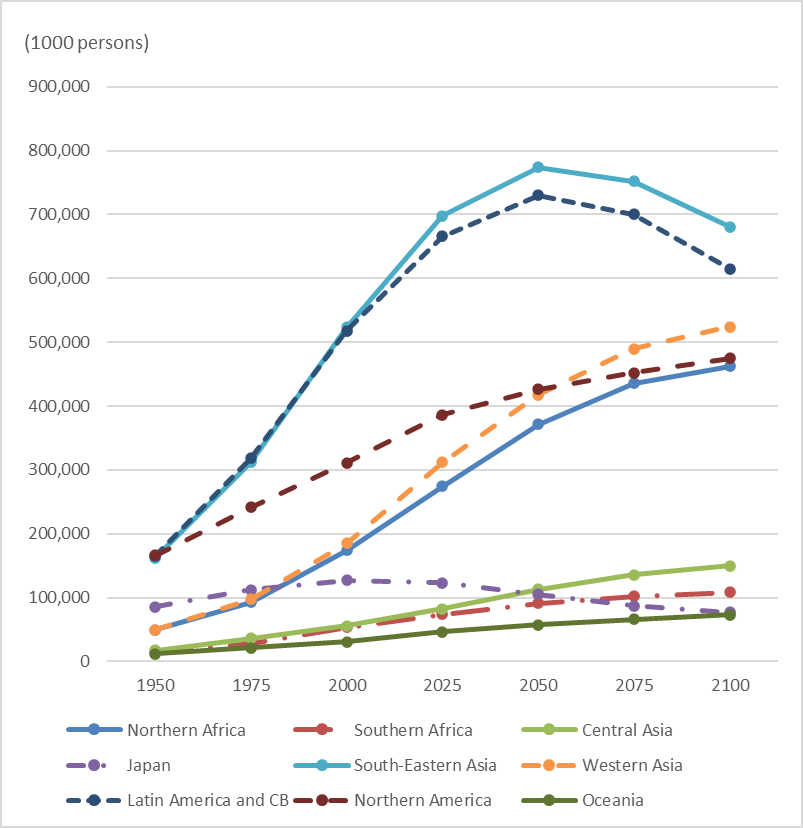
Note: “ex JPN” and “and CB” respectively indicate “excluding Japan ” and “and the Caribbean.”
(注) “ex JPN” と “and CB” はそれぞれ “excluding Japan”(除く日本)と “and the Caribbean”(とCaribbean)を表している.
Source: By Yoshida using UN (2024) “World Population Prospects 2024” data.
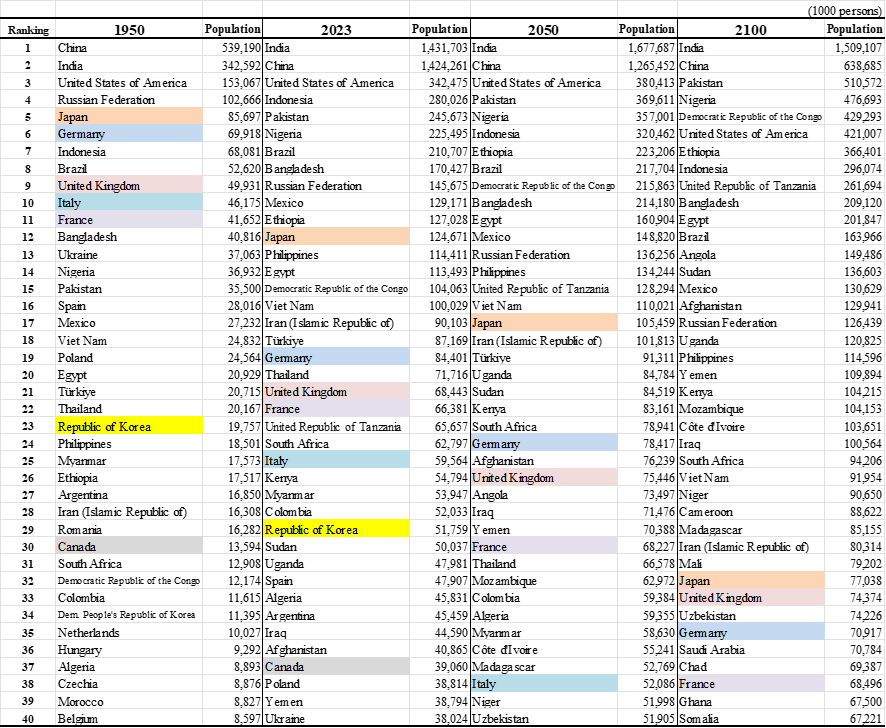
Table 1 Top 35 Countries with the Largest Population Sizes 1950-2100
Table 1 人口規模の大きい上位35カ国 1950-2100
Source: By Yoshida using UN (2024) “World Population Prospects 2024” data.
Table 2 Total Fertility Rate of China, Republic of Korea, and G7 countries (except United States)
Table 2 中国,韓国,G7の国々(除くアメリカ合衆国)の合計特殊出生率
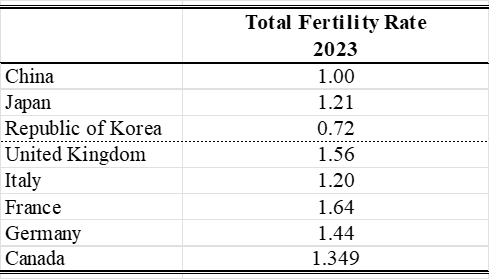
Source: By Yoshida using UN (2024) “World Population Prospects 2024” data.
[Definitions]
- MDRs (more developed regions) は Europe, Northern America, Australia/New Zealand とJapanから構成される.
- LDRs (less developed regions) はAfrica, Asia (除くJapan), Latin America, とthe Caribbean plus Melanesia, Micronesia, Polynesia から構成される.
- LDCs (least developed countries) は45の国々からなる.
# 上記カテゴリーについての詳細は UN の Website をご参照ください.
https://population.un.org/wpp/definition-of-regions
- MDRs, more developed regions, consist Europe, Northern America, Australia/New Zealand and Japan.
- LDRs, less developed regions, consist all regions of Africa, Asia (except Japan), Latin America and the Caribbean plus Melanesia, Micronesia and Polynesia.
- LDCs, least developed countries, are consist of 45 countries.
# See UN Website for the details of the above categories.
https://population.un.org/wpp/definition-of-regions
[Facts]
- 世界人口は2075年以降100億人水準に収束することが予測されている.(Figure 1)
- LDRs excluding LDCs の人口は2050年以降減少が見込まれるが,LDCsの人口は増加しス続けることが見込まれる.(Figure 1)
- Eastern Asia ex JPN の人口は2025年以降大きく減少することが見込まれている.一方,Eastern and Western Africaの人口は一貫して増加し続けることが見込まれている.(Figure 2-Panel 1)
- South-eastern Asia とLatin America and CB の人口は2050年以降減少することが見込まれる.一方,Northern America,Western Asiaと Northern Africa の人口は一貫して増加し続けることが見込まれている.(Figure 2-Panel 2)
- 日本の人口は今後減少を続け2100年頃にはOceania の人口と同水準となると予測されている.(Figure 2-Panel 2)
- India,China とUnited States は今後も人口規模でトップランクの地位を維持し続けることが見込まれる.しかし,China の人口水準は2100年には現在の半分以下にまで減少する見込みである.(Table 1)
- United States 以外のG7の国々とRepublic of Korea の人口推移に焦点をあてると,これらの国々が,今後,人口大国の地位を失っていく状況が理解できる.特に,Japan と Republic of Korea の落ち込みは激しい.(Table 1)
- The world population is projected to stabilize at around 10 billion after 2075. (Figure 1)
- The population of LDCs excluding LDCs is projected to decline after 2050, while that of LDCs is expected to continue increasing. (Figure 1)
- The population of Eastern Asia ex JPN is projected to decline significantly after 2025. Meanwhile, those of Eastern and Western Africa are projected to continue increasing steadily. (Figure 2-Panel 1)
- The populations of South-eastern Asia and Latin America and CB are projected to decline after 2050. Meanwhile, those of North America, Western Asia, and North Africa are projected to continue increasing steadily. (Figure 2-Panel 2)
- Japan’s population is projected to continue declining and reach a level comparable to Oceania’s population around 2100. (Figure 2-Panel 2)
- India, China, and the United States are expected to maintain their top-ranking positions in terms of population size. However, China’s population is projected to decline to less than half its current level by 2100. (Table 1)
- Focusing on the population trends of G7 countries other than the United States and the Republic of Korea reveals that these nations will lose their status as major population powers in the future. The declines in Japan and the Republic of Korea are particularly steep. (Table 1)
[Discussion]
- 国別の将来人口の減少はUnited States 以外のG7各国とEastern Asiaの主要国において顕著である.特にEastern Asiaの,中国,韓国,日本の落ち込みが激しい.この状況はTable 2に示す各国の合計特殊出生率の現状と整合的である.
- Future population declines are particularly pronounced in G7 countries other than the United States and in major Eastern Asian countries. The drops in China, Republic of Korea, and Japan are especially steep. This situation aligns with the current total fertility rates shown in Table 2 for each country.
コメント