Full Title: Provision Problem of Public Goods – Part 2- [Article No. 2.4.2]
日本語タイトル:公共財の供給問題- Part 2- [記事 No. 2.4.2]
Posted on June 15, 2026.
[Images]
(in Japanese)
Note: For a more detailed discussion of private goods, please consult textbooks on microeconomics at the intermediate level or higher.
(注)私的財の詳細については,中級以上のミクロ経済学のテキストをご覧ください.
Source: By Yoshida.
[Discussion]
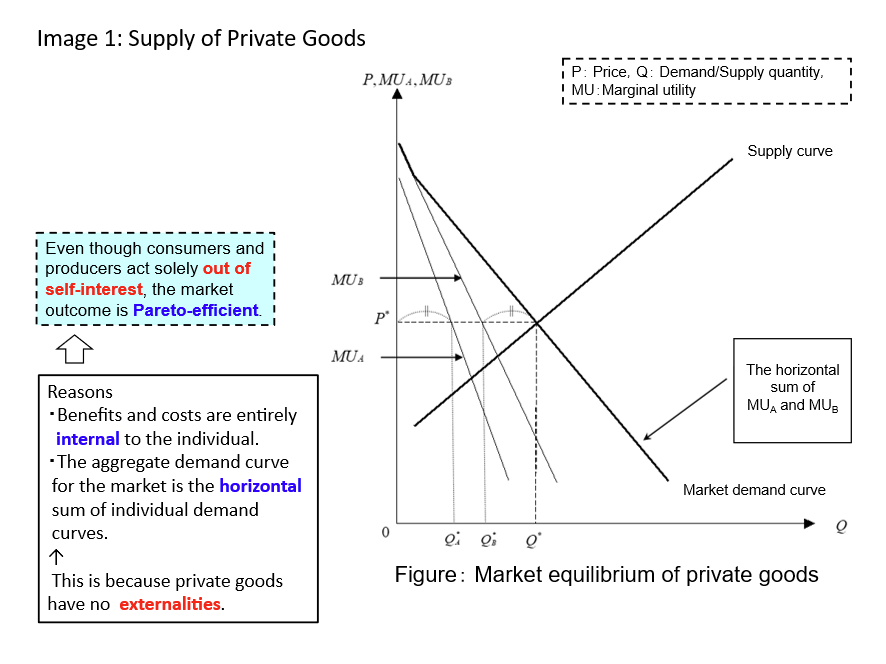
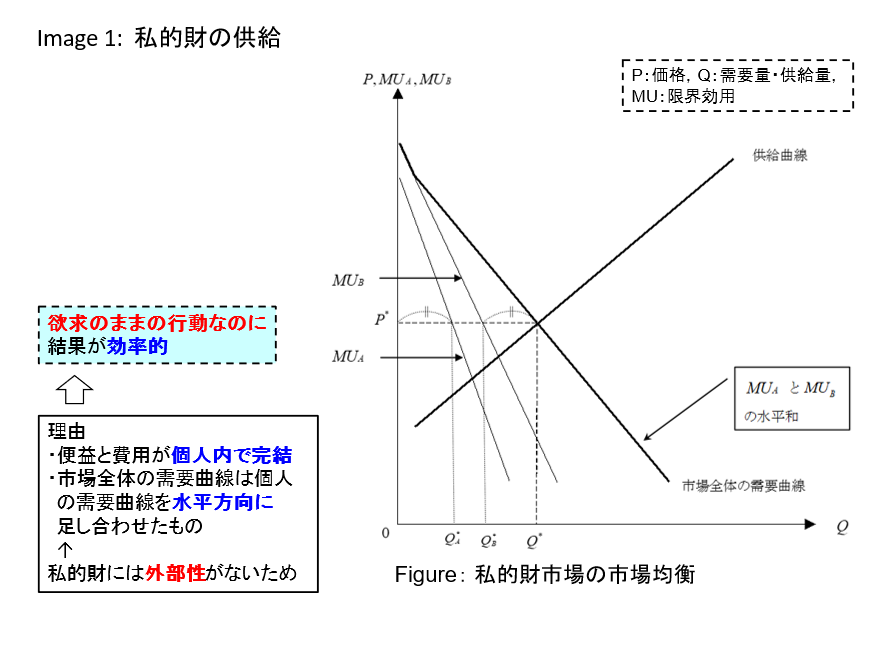
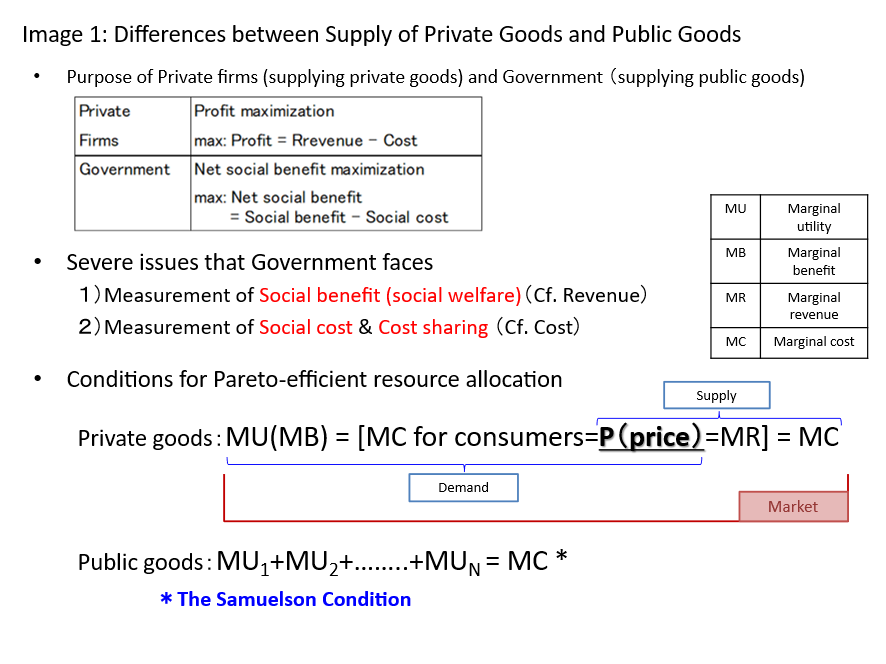
- 私的財のパレート効率的配分は市場全体の需要曲線と供給曲線が交わる点,均衡点(P*, Q*),で決定される(市場均衡の成立).当該均衡点では私的財の効率的配分条件,MU=P=MC,が成立している(参照:[記事 No. 2.4.1]).
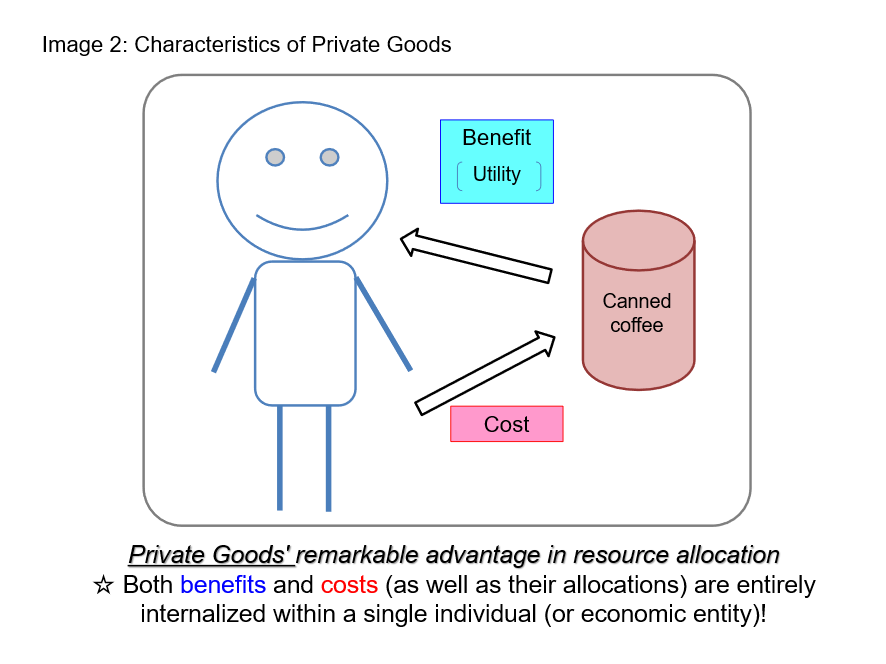
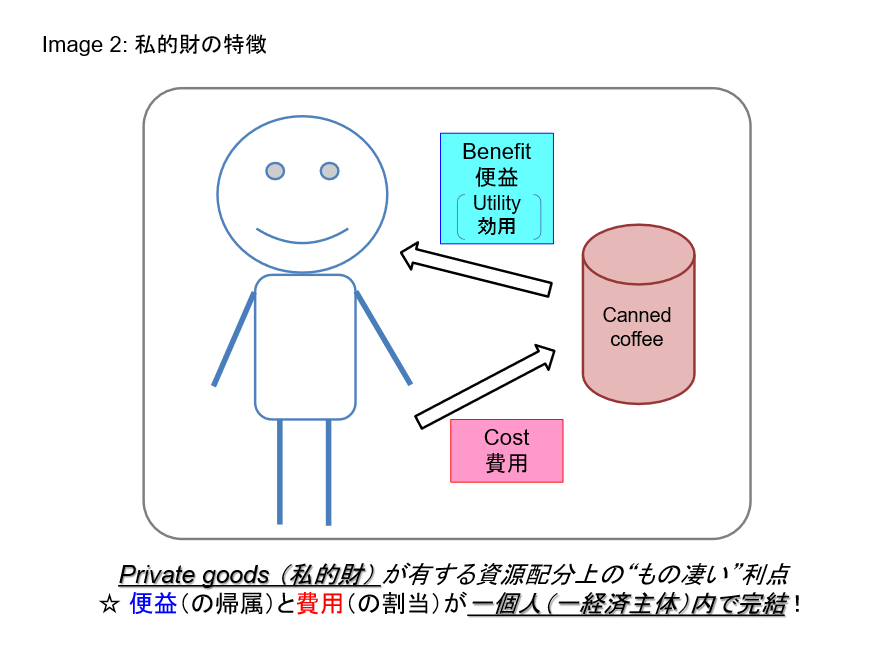
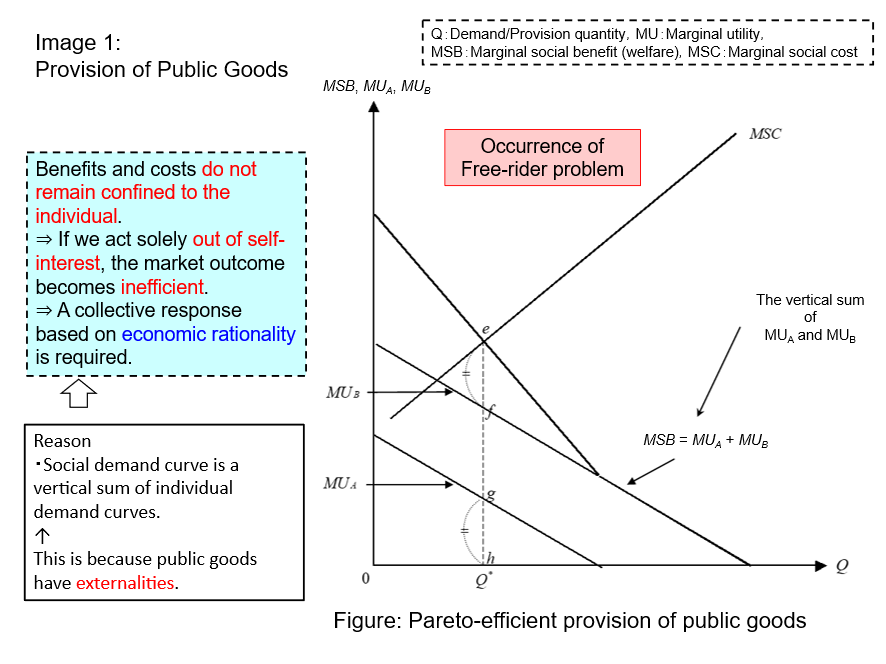
- 私的財に関しては,消費者も企業も自らの欲望にのみ従って行動すれば,その効率的な資源配分が達成される.この結果は,Image 2 で示す通り,私的財の消費には外部性が発生しないためである.
- 私的財は,その消費において外部性を発生させない財,厳密には,消費における排除性と競合性を有している財であるために,その市場全体での需要曲線は各個人の需要曲線の水平和となる(Image 1).一見,この市場需要曲線の形成過程は平凡なことのように思えるかもしれない.しかし,私的財の市場需要曲線がこのように形成されるからこそ(簡単に言えば,誰かが私的財を消費している場合,他の誰かはその私的財を消費できないからこそ),私的財消費に関する便益が帰着する個人にその費用負担を一元的に帰着させることができる.そのため,市場において,私的財の財価格を介した需給調整を完遂することができるのである.残念ながら,公共財の消費は大きな外部性を発生させるため,公共財の供給においてはこのメカニズムを使うことができないのである.
- The Pareto-efficient allocation of private goods is determined at the point where the market demand curve and the supply curve intersect, the equilibrium point (P*, Q*), (establishing a market equilibrium). At this equilibrium point, the condition for the efficient allocation of private goods, MU = P=MC, holds (see [Article No. 2.4.1]).
- With regard to private goods, Pareto-efficient resource allocation is achieved when both consumers and firms act solely out of self-interest. This is because, as shown in Image 2, private goods do not generate externalities.
- Because private goods possess the twin properties of excludability and rivalry in consumption, they generate no externalities, meaning that the market demand curve is derived from the horizontal summation of individual demand curves (Image 1). While this formation process may appear trivial at first glance, it is foundational. Precisely because the market demand curve is formed in this manner, where one individual’s consumption inherently precludes another’s, the cost of private goods is internalized and borne exclusively by the consumer who benefits. Consequently, the market mechanism achieves optimal resource allocation through the price system. Unfortunately, this price mechanism fails in the supply of public goods due to the significant externalities inherent in their consumption.
コメント